
Word Racer Strategy Guide
Two minutes goes fast. These are the habits that made the biggest difference to my scores, from playing the original Yahoo! version as a kid and from hours of testing this one.
1. Build word families
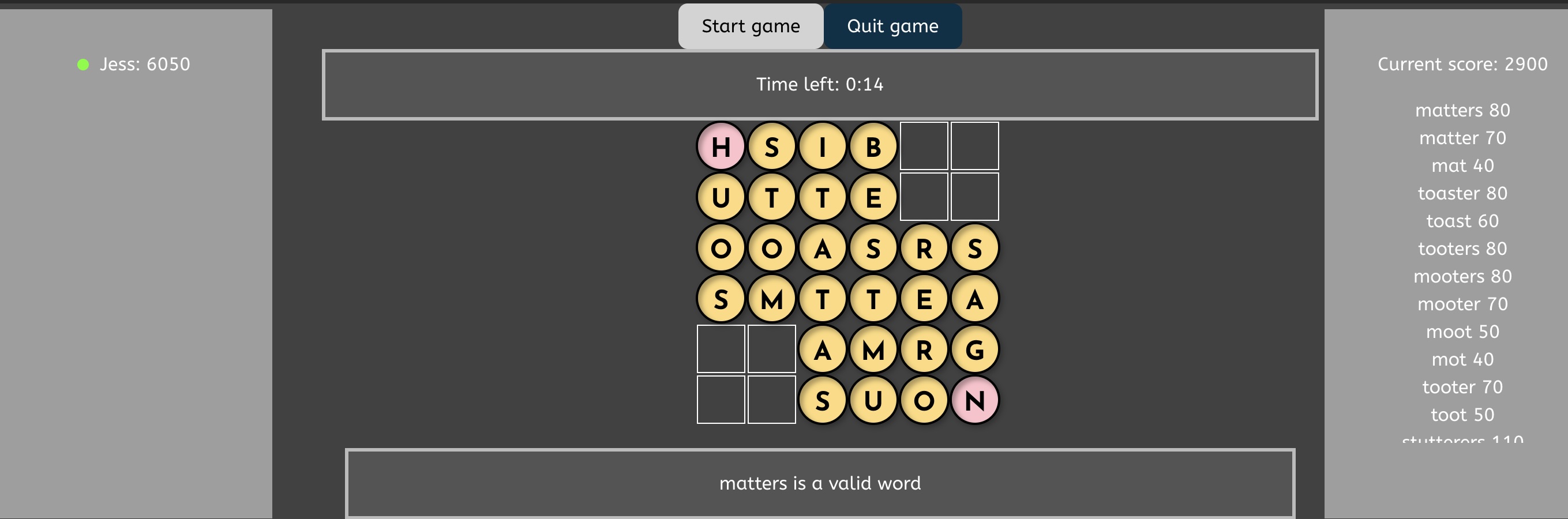
Once you find a word, look at its neighbors before you move on. Most short words are the start of something longer. If you find MAT, check whether there's an S next to the T (MATS), an E and R nearby (MATTER), and then an S after that (MATTERS). Every step is a separate word with its own points, and you've already located the letters, so each extra word takes seconds.
2. Hunt for endings: -S, -ED, -ER, -ING
Suffixes are the fastest way to multiply your word count. Before a round gets going, scan for an S, and for E-D, E-R, or I-N-G sitting next to each other. Any word you find that ends right next to one of these probably has a longer form. Plurals especially: an S in a busy part of the grid can add a whole second batch of words.
3. Don't forget diagonals
New players tend to read the grid like a page, left to right and top to bottom. But every tile has up to eight neighbors, and the diagonal paths are the ones other players miss. When you're stuck, pick one letter and trace every direction out of it, including the corners.
4. Plan around bonus tiles
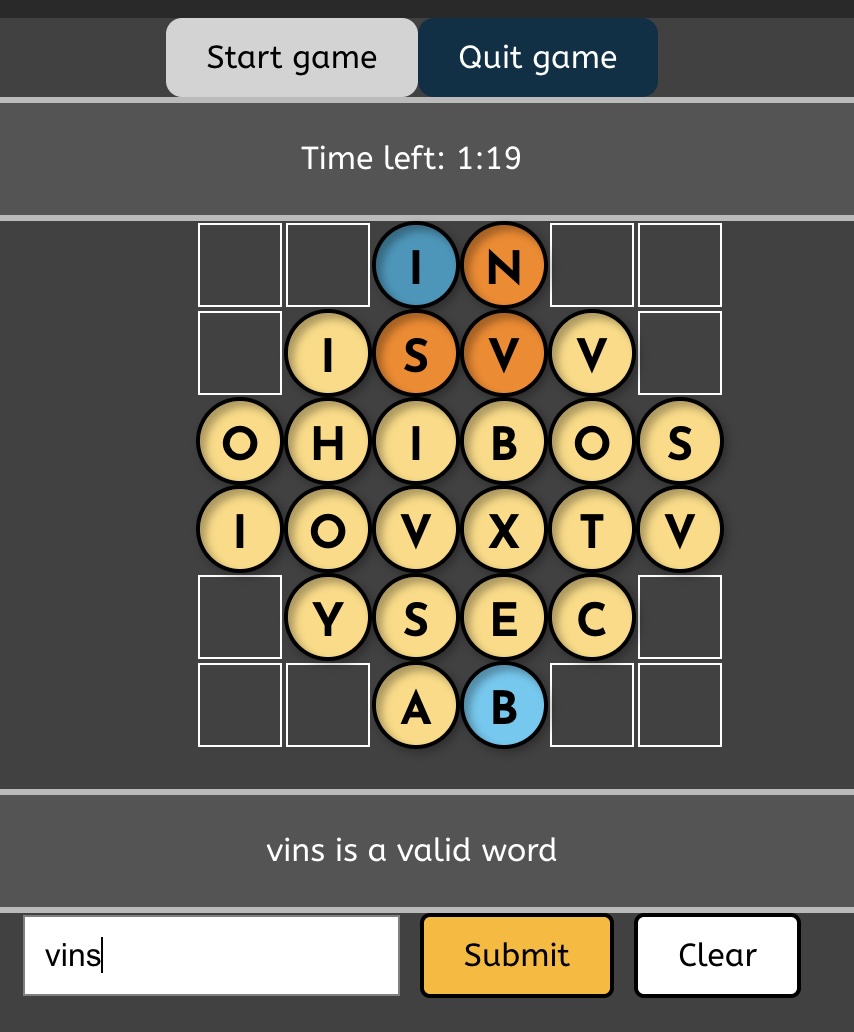
From round 2 on, a single blue or red tile can be worth more than everything else on the board. Because the multiplier applies to the whole word, a 5-letter word through a triple tile (180 points) beats three ordinary 5-letter words (60 points each). At the start of a round, look at the letters around each bonus tile first and ask what words run through it. A path that uses two bonus tiles at once is rare, but when you spot one it can be worth several hundred points.
5. Go long when you can
The long-word bonus grows quickly. A 7-letter word earns 110 points, an 8-letter word 180, and a 9-letter word 280, even without a multiplier. Long words also tend to be built from pieces you've already found (a stem plus a suffix), so they're often closer than they look. If you've found PAINT and PAINTER, check for PAINTERS.
6. Type short words without hesitating
A 3-letter word is only 40 points, but it takes about two seconds to find and type. Early in a round, fire off the obvious short words while your eyes look for longer ones. If you're not sure a word is valid, just try it. There's no penalty for a wrong guess, only the second or two it costs you.
7. Know the grids
The grid shape is the same for each round every game, and only the letters change. Knowing round 2 has double tiles at its top and bottom, or that round 4 has a hole in the middle that blocks straight paths, tells you where to look first. Solo practice games are a good way to learn the shapes without the pressure of a live race. The rules page shows all four.
8. Use the break to learn
Between rounds, open Review found words. It lists the words everyone found and the words nobody found. Reading the "not found" list after a few games is one of the fastest ways to pick up the short, unusual words that show up again and again, like QAT, ZEE, OXO, and ADZ.
9. In multiplayer, speed matters more than rarity
In group games every player scores their own words, so you don't lose points when a friend finds the same word. Don't avoid obvious words because someone else probably got them. Your score only depends on how many words you find, so the player who types the most wins.